
People’s digital habits when researching products no longer apply only online. Purchasing decisions are increasingly shaped by a combination of physical and digital information. Customers might explore a product at home, then make their final buying decision in a physical store. Interactive in-store marketing is an excellent tool for sparking that interest and elevating the experience at the right moment.
Picture: Pixabay
Project Background
Packforce is a packaging company with over 30 years of experience, operating primarily in the Baltic markets while having expanded into Finland and South Africa. They offer packaging solutions for both retail and e-commerce, with a strong emphasis on quality and sustainability.
About 70% of Packforce’s customer base consists of business clients (B2B), with the remaining 30% being private consumers (B2C). The core challenge is visibility: many private customers buy packaging products from grocery stores and don’t actively seek out specialised retailers. This limits B2C growth.
The project supports the opening of Packforce’s new store in Vantaa. The goal is to enhance the in-store experience and bridge physical shopping with digital elements such as QR codes and videos, while appealing to both existing customers and younger audiences.
Objectives
The primary objective is to support the store’s successful launch by improving the customer experience and connecting physical retail with digital content. In practice, this meant designing a QR code concept that links products to videos and additional information, producing entertaining content that showcases practical packaging solutions, and driving engagement among private consumers and younger customer groups. The broader aim is to grow the B2C segment by making packaging products more approachable and interesting to everyday shoppers.

Picture: Pixabay
From Ideas to Action
We started by benchmarking other companies, visiting stores in person to assess how QR codes were used, how visible they were, and what kind of experience they created. The conclusion was clear: QR codes need to lead somewhere worth going. Generic product descriptions and website redirects don’t cut it. The content has to be genuinely entertaining.
We produced DIY videos using the store’s own products, keeping the tone fun and practical so they’d stand out and give customers a reason to buy. Instagram was chosen as the publishing platform, which also gave the store a simultaneous boost in social media visibility.
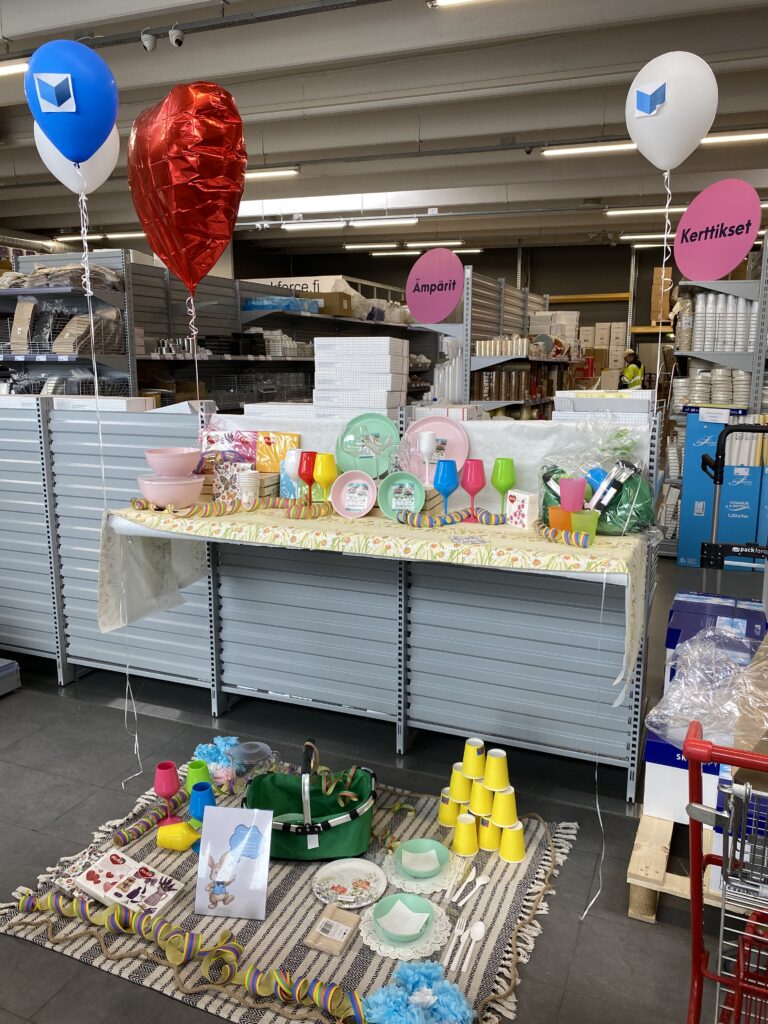
For placement, we built colourful, eye-catching Easter and May Day themed display tables right at the store entrance, with QR codes and videos clearly visible. Additional QR codes were placed on the shelf locations of featured products, giving customers another natural point to engage.
What We Learned
Combining physical retail with digital content works. Customers expect more than a traditional store experience, and QR codes proved to be a practical way to bridge the gap, giving shoppers instant access to ideas and inspiration without leaving the aisle.
Short-form video was the strongest format for showing packaging solutions in action. The content that performs best is visually engaging, entertaining, and genuinely useful rather than promotional.
The project also made clear how much careful planning and a well-defined division of responsibilities matter. Good teamwork is what turns ideas into execution. A successful customer experience comes from understanding what people actually need, then designing around that.
Suurin osa Showcasen blogeista on toteutettu osana Laurean opintojaksoja. Koko koulutustarjontaamme voi tutustua nettisivuillamme. Tarjoamme kymmenien tutkintoon johtavien koulutuksien lisäksi myös paljon täydennys- ja erikoistumiskoulutuksia sekä yksittäisiä opintojaksoja avoimen AMK:n kautta!